Back inside the former H and R Block building, behind tax forms and carpeting, behind the unassuming facade of U.S. tax bureaucracy, lurks paranoia.
The pressure is waiting, hovering around students as they come into the empty building and begin a weekend of intense learning and work.
Western’s Sixth Annual Photography Workshop began here.
Jack Corn, workshop director, assembled the faculty, which included:
C. Thomas Hardin, chief photo editor and director of photography for The Courier-
Jay Dickman, 1983 Pulitzer Prize winner from the Dallas Times-Herald.
Larry Craig, editor and publisher of The Green River Republican.
Michael Morse, Western photojournalism program chairman and photographer for the Park City Daily News.
Rebecca Skelton, Dallas freelance photographer, formerly with the Dallas Times-Herald.
David Perdew, photo editor, Gannett Rochester Newspapers
Andy Corn, lab director, Prophoto of Nashville.
Professionals, students and others gathered in the rural Kentucky town Sept. 22-24 to document the people of Butler County.
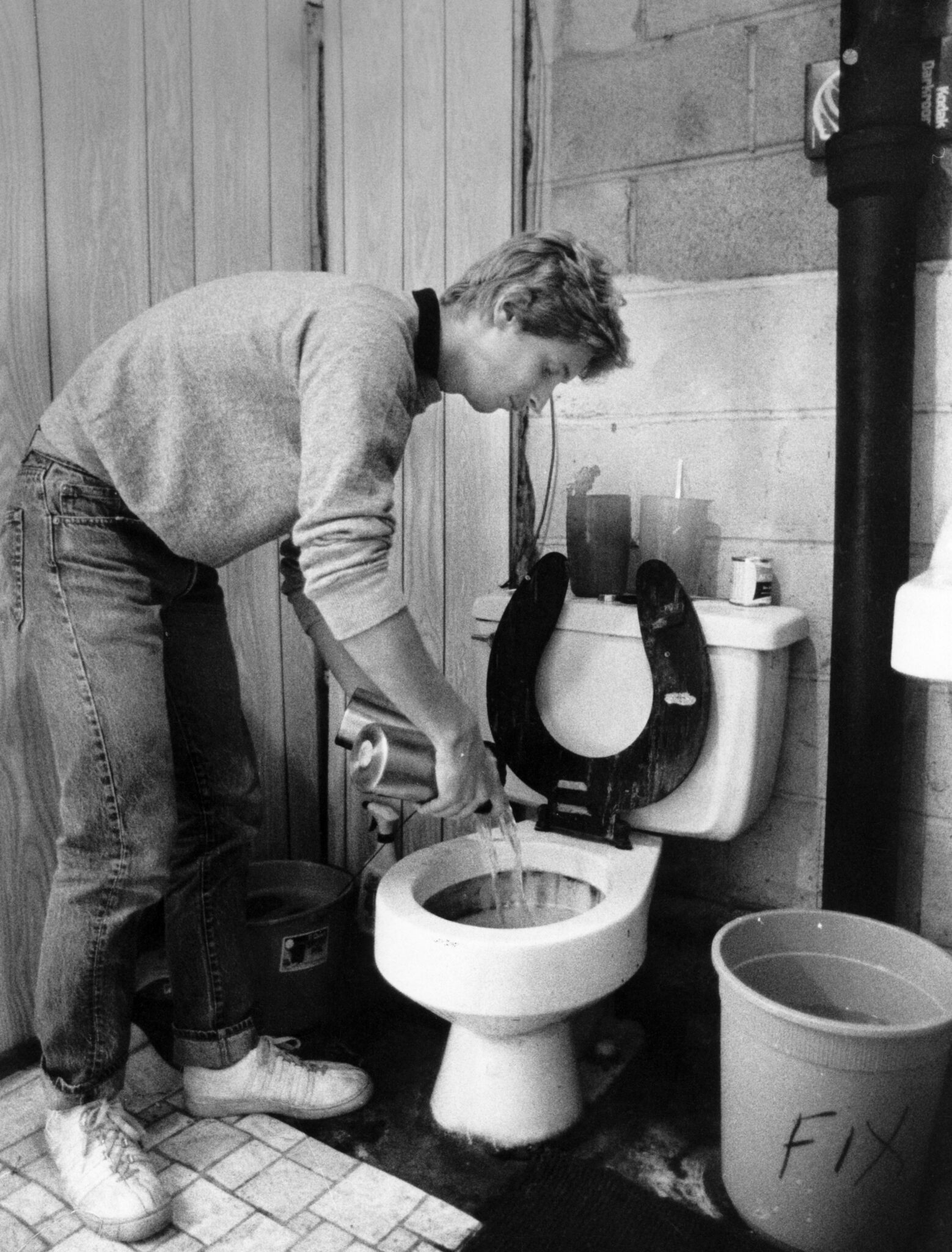
A darkroom and photo lab were quickly assembled in an empty building. Film was developed in a dingy bathroom accompanied by a lot of bathroom humor.
“It takes four flushes to wash the film,” said Kevin Eans as he emptied chemicals into the commode.
By 5 p.m. Saturday, 234 rolls had been processed.
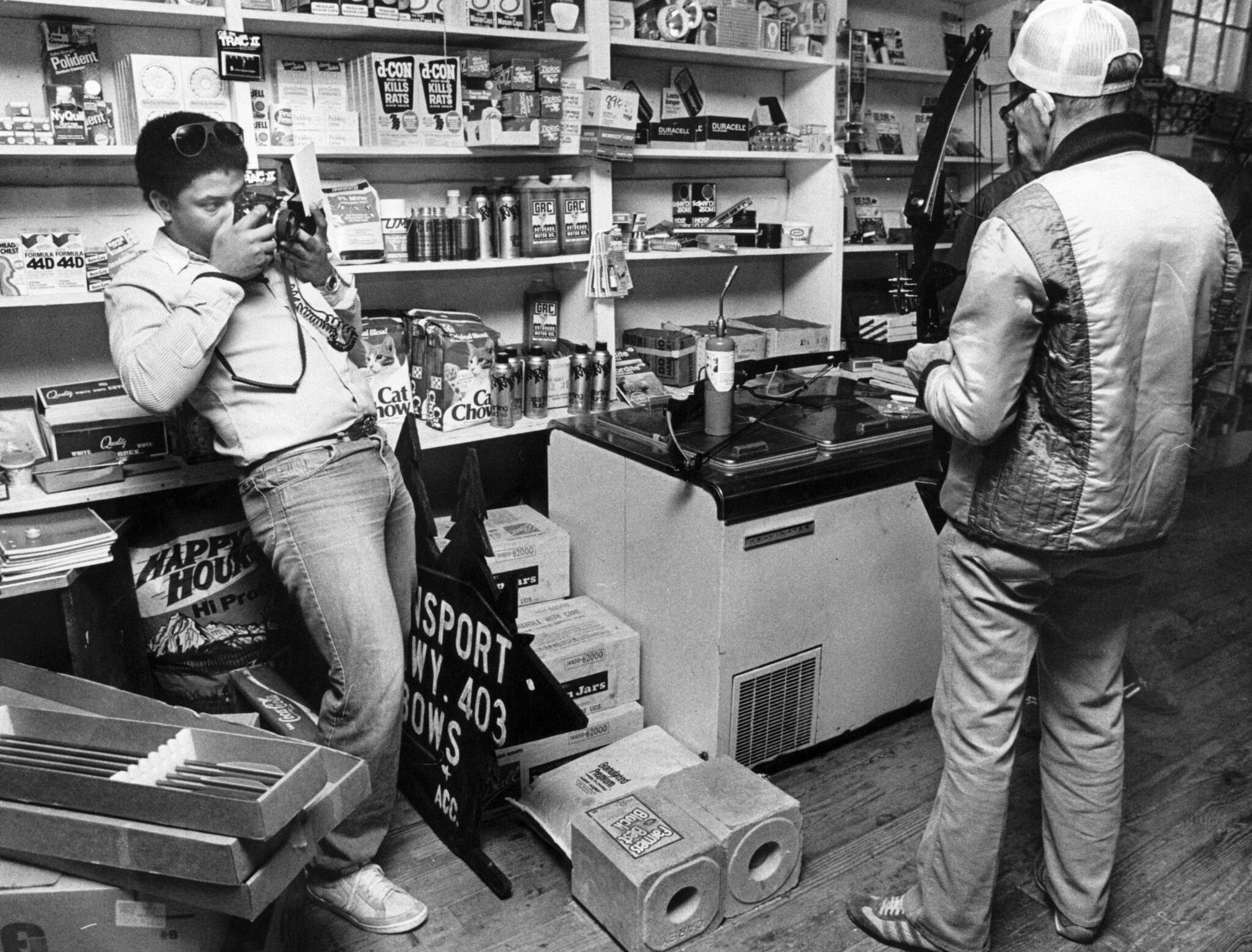
Assignments were given out and the student photographers went to meet their subjects.
“Watch out for the rattlesnakes and fresh cow piles Eileen,” warned Corn as Eileen Tehan left to go coon hunting with her subject.
Some of the assignments were exciting, but others seemed mundane at first and it took consideration. It was the photographer’s eye and artistic interpretation that yielded a telling documentation of life in a rural Kentucky town.
“The difference between the pro and the amateur is that the pro makes it work no matter what the subject,” Corn said.
This was an experience in reality – producing under pressure on an assignment. As Dickman said, «This weekend is teaching you what it’s really like to work. This is very close to reality.”
T.J. Hamilton’s assignment was to photograph a couple on their farm.
“I learned a lot about
shooting and about how to deal with the people I’m shooting,” Hamilton said. “It was a great experience. Mr. (Woodrow)
Brown said he hadn’t seen himself in the way that I, as a photographer, saw him.” Rebecca Skelton, a Dallas freelance photographer and member of the workshop faculty, showed her work the first night.
When asked if photojournalism was more difficult for a woman, she said, “You have to show them you can carry your own load.
“You have to blend in, but you want to use your feminine insight. We do see things differently sometimes. You may have to over compensate sometimes, but always be pro-fessional.”
She had married Dickson a week before the workshop and celebrated her 30th birthday the first night of the workshop.
Criticism of students’ work was direct and sometimes harsh. But it produced results.
“I learned a lot,” said Jim Battles. “I’m still trying to figure out exactly what I learned, but I know I learned a lot.”
Tom Hardin told the students Friday night,
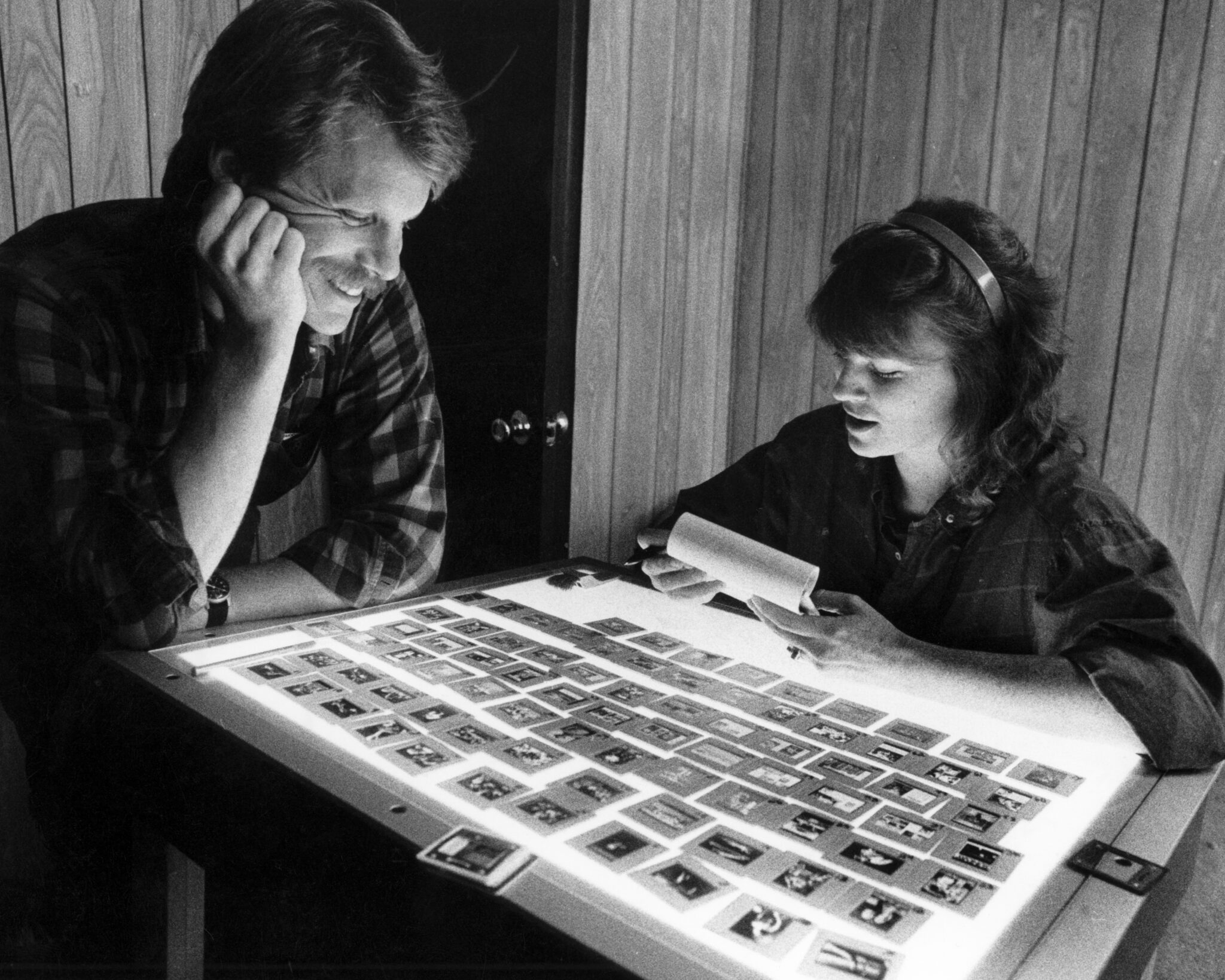
“You’ve got a lot of work to do tomorrow.” At 12:30 a.m. students were working over proof sheets deciding what they needed to complete their picture stories.
The deadline was 5 p.m. Saturday.
Mike Collins spent Saturday making slides as students brought in their completed stories. A slide presentation that night showed students’ work.
Dickman also showed his work from El Salvador, which won him a Pulitzer. “You’re stepping into people’s lives and you have to be very carr-ing about what you’re show-ing.
“I tried to illustrate what I felt was happening there,” Dickman said. Several people from the community viewed Dickman’s work and the student’s that followed.
Through the efforts of all the student photojournalists and the help and criticisms of faculty we have a glimpse of life in Morgantown.
We’ve seen a bald man in Floyd’s Barber Shop getting a haircut, a ferry boat operator and his family near the Green River, and we looked into the face of a young coal miner.
Back behind the Hand R Block tax forms, along with the pressure, paranoia and imported purple shag carpeting, we learned a lot.