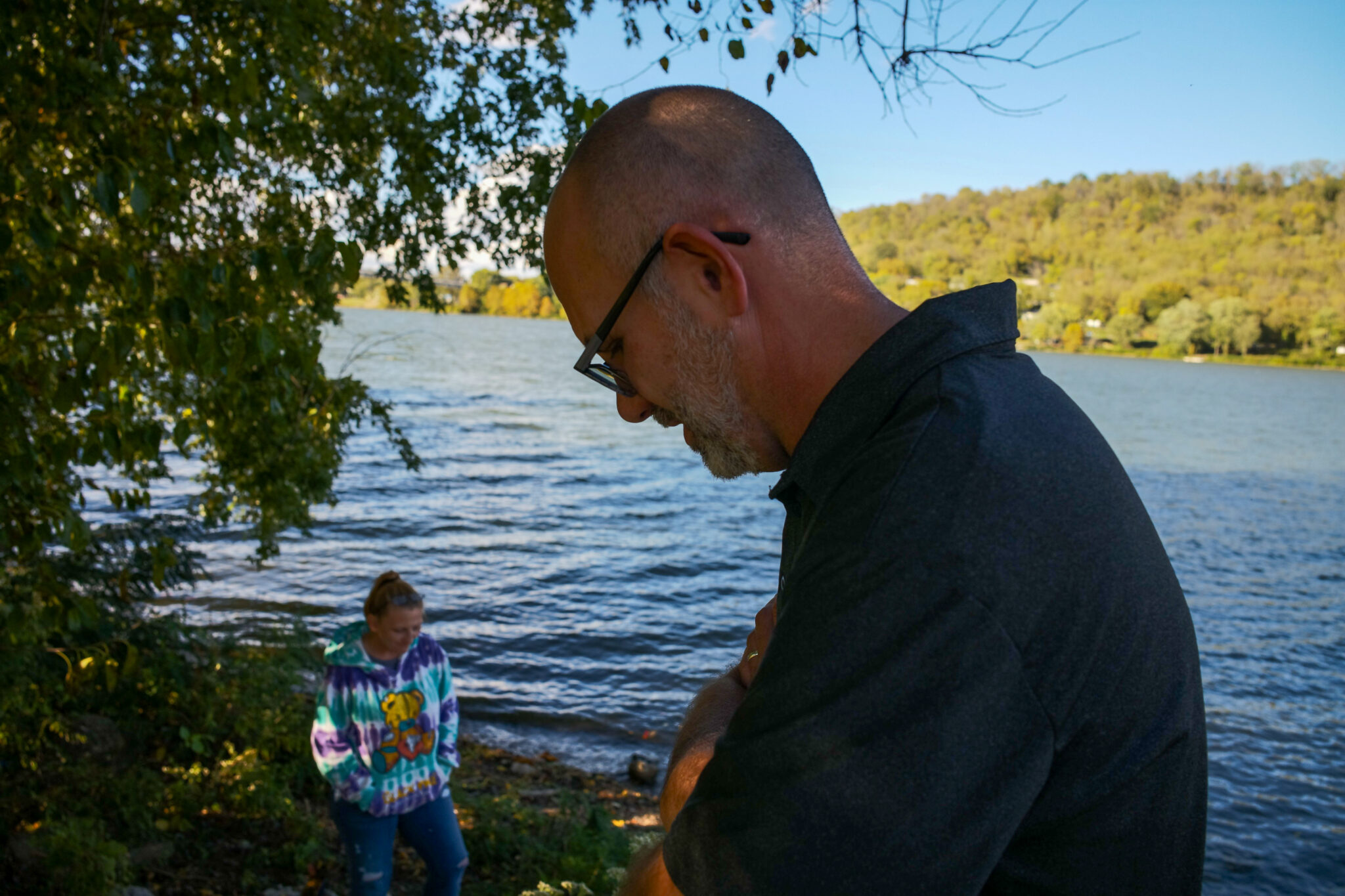
Pastor Chad Current was 14 years old when he first imagined working in a church.
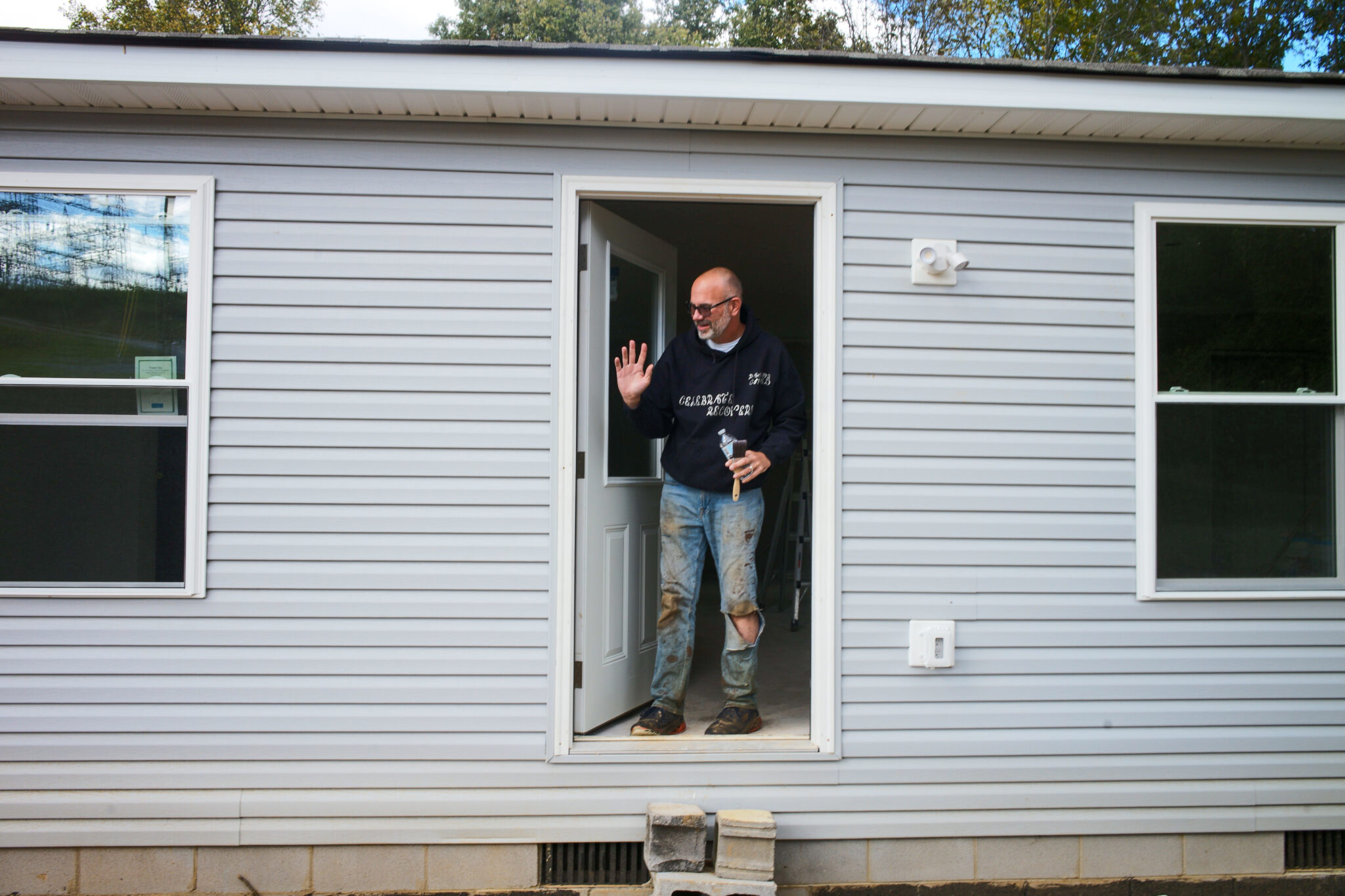
Now tall, slender and often sporting a stubble beard behind his glasses, he moves constantly around Cross Point Church shifting chairs, lifting boxes and helping wherever a hand is needed. He studied religion in college, but he also grew up in government housing. He never forgot what it felt like to need help.
“It’s just what we are supposed to do as followers of Christ,” he said. Being able to offer shelter to families in crisis felt like a blessing he never took lightly.
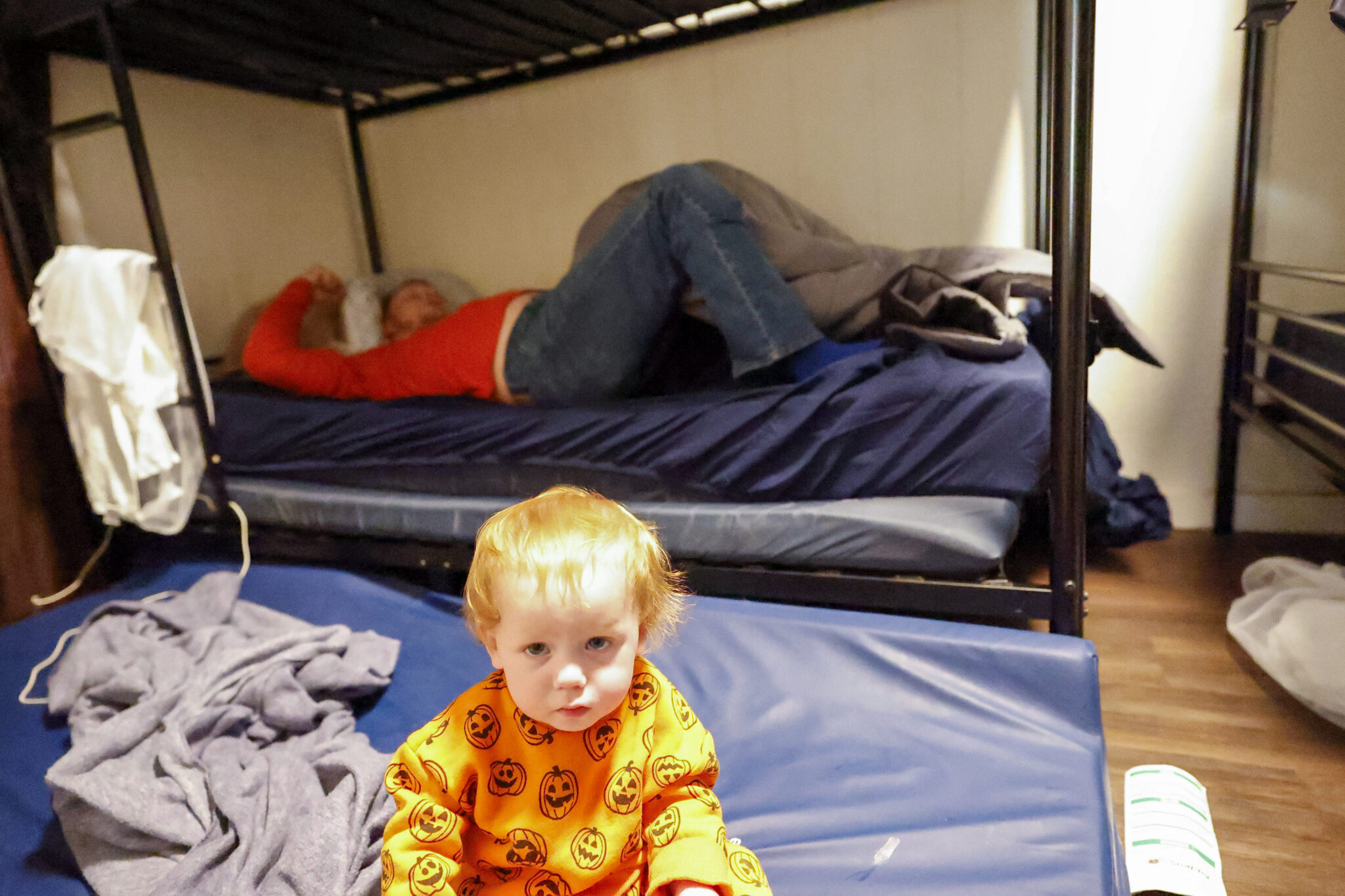
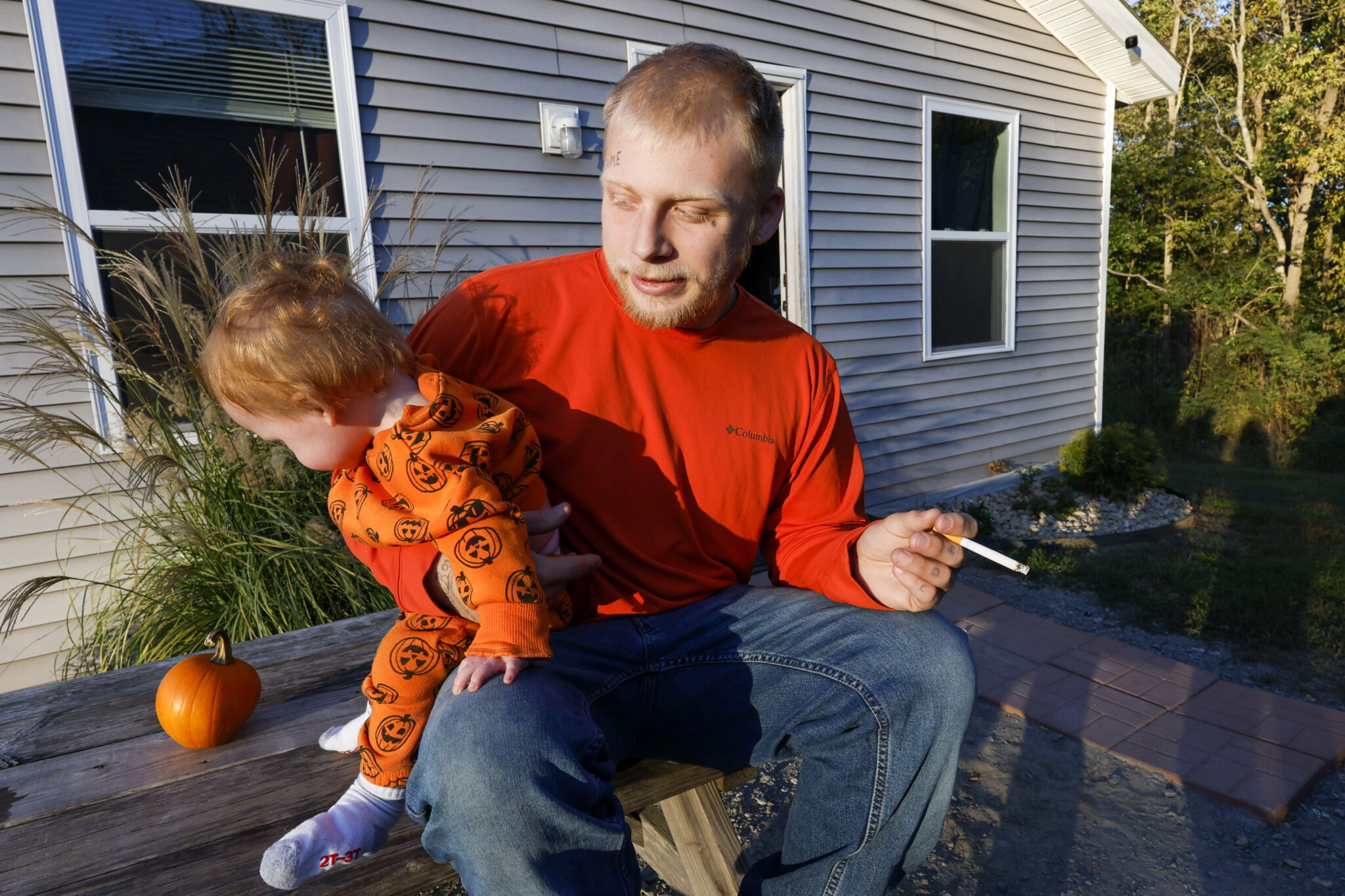
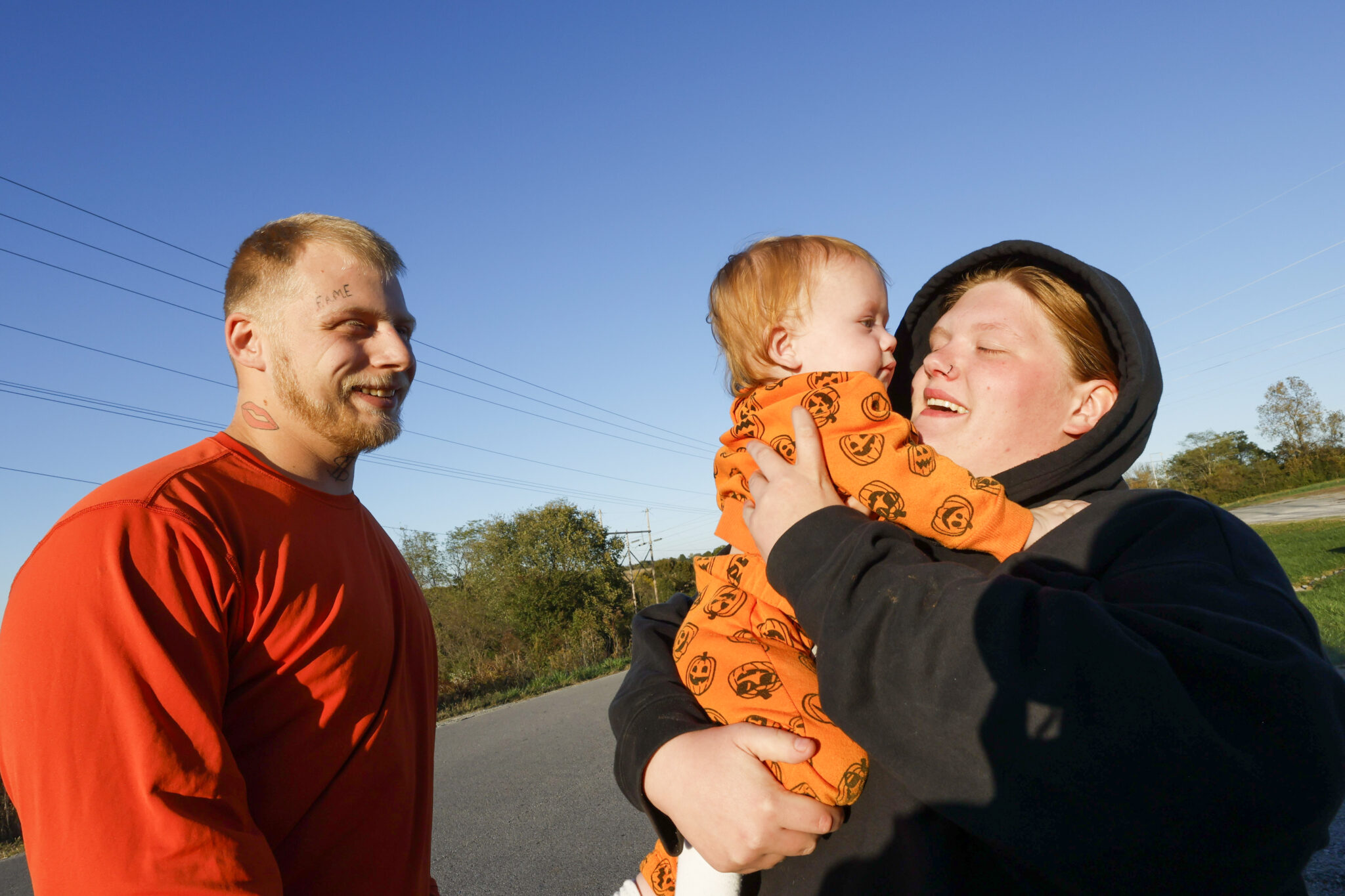
Down a small hill behind the church sit three tiny emergency shelters. They are simple, temporary places to sleep and breathe, yet for Dillon Basford, his partner, Kaylee Mendicky, and their 1-year-old son, Kobe, they represented safety for the first time in months.
The family lost their housing after falling behind on payments for their trailer. The debt totaled $11,000, far more than they could gather in time. Through a partnership between Welcome House, a nonprofit shelter, and Cross Point Church, they found themselves in Maysville, a community that like many others is grappling with how to care for its unhoused neighbors.
Maysville’s approach has brought together a coalition of the police, the unhoused and various organizations and shelters including Welcome House to work towards solutions. This was a radical change, growing out of a poor outcome when city employees, on orders from their boss, set fire to a homeless camp in 2021.
The coalition’s timing was critical and prescient. In 2024, the Kentucky General Assembly passed House Bill 5, also known as the Safer Kentucky Act, that criminalized homelessness by restricting where people can sleep. Chad, cooperating with police, chose instead to set out the welcome mat. “I’m just here for you,” he said about the people seeking shelter. “When you’re willing to come along like that’s the reward.”
The numbers reveal how much the small shelter homes are needed. Between January and October 2025, 106 people used them: 34 men, 38 women and 34 children. The numbers marked a 32 percent annual increase in people who benefited from the coalition’s work.
Chad is usually there to greet each new arrival, just as he greeted the families before and after them.
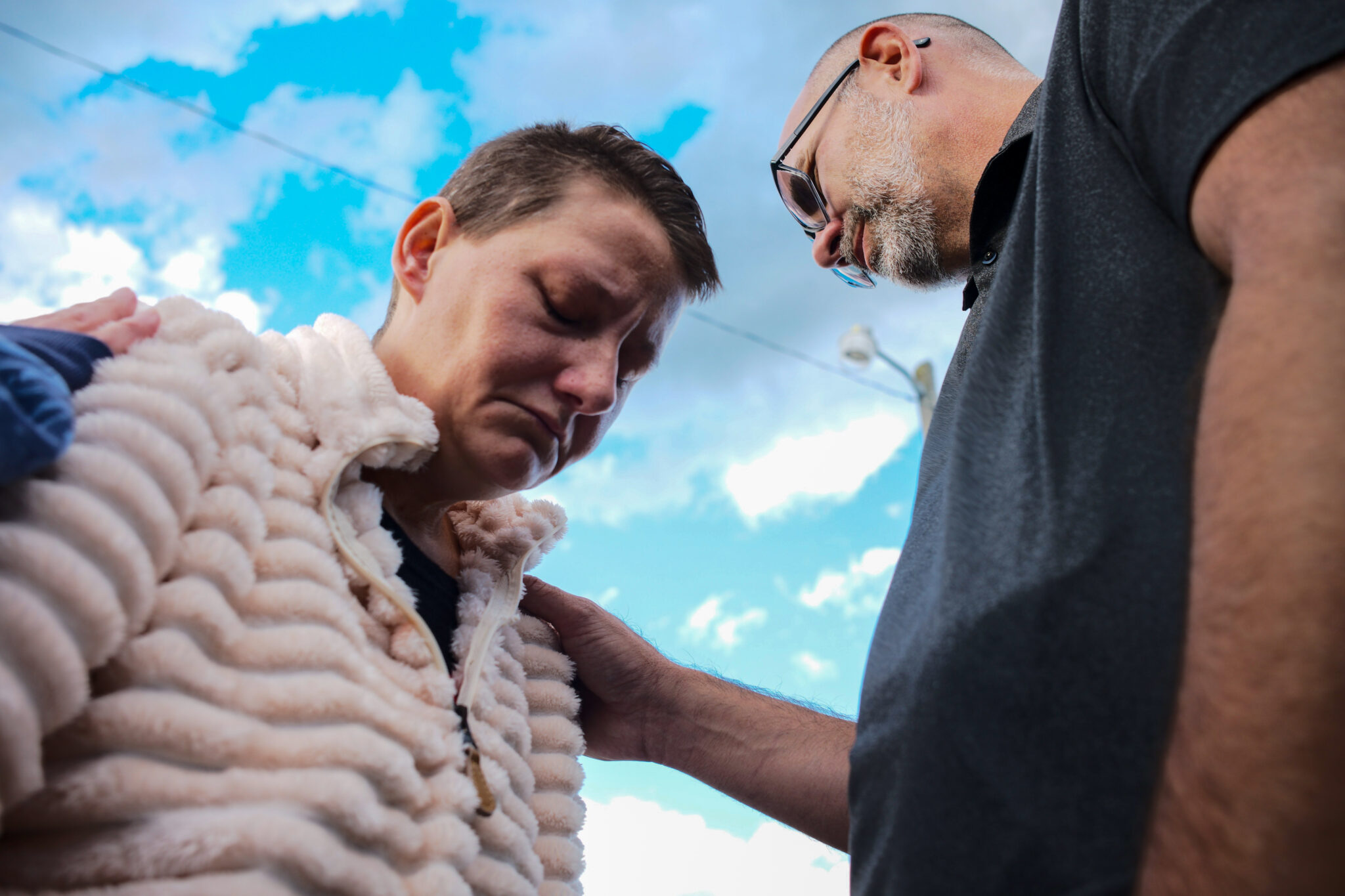
“Welcome, we’re really honored to have you as our guests,” he tells them. He shares his phone number. He prays.
He sees his faith strengthened in their arrival at the church doors. “They had every reason to give up on themselves, on their child,” he said.
Dillion and Kaylee sat with their child while she told her story of quitting hard drugs for her baby. The couple is trying to change the way they live, and the temporary home has helped. “Everything I do, I do for the baby,” she said.
The shelters are meant to be a landing point, not a final stop. Families can stay for seven days. That limit protects insurance coverage for the church and keeps the partnership running. It also gives families a reason to stay connected with Welcome House and continue toward stable housing. It’s a place where new beginnings can take place.