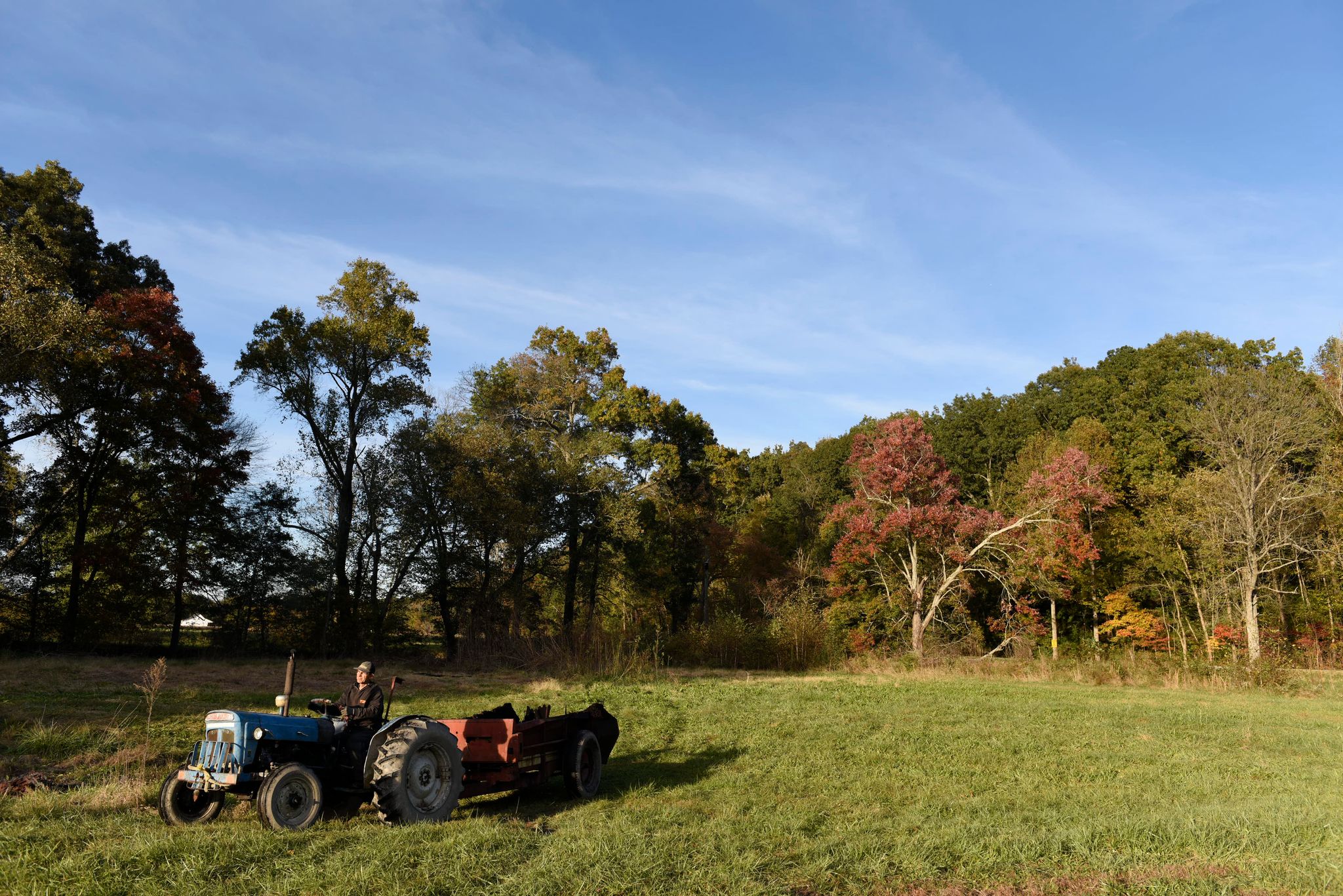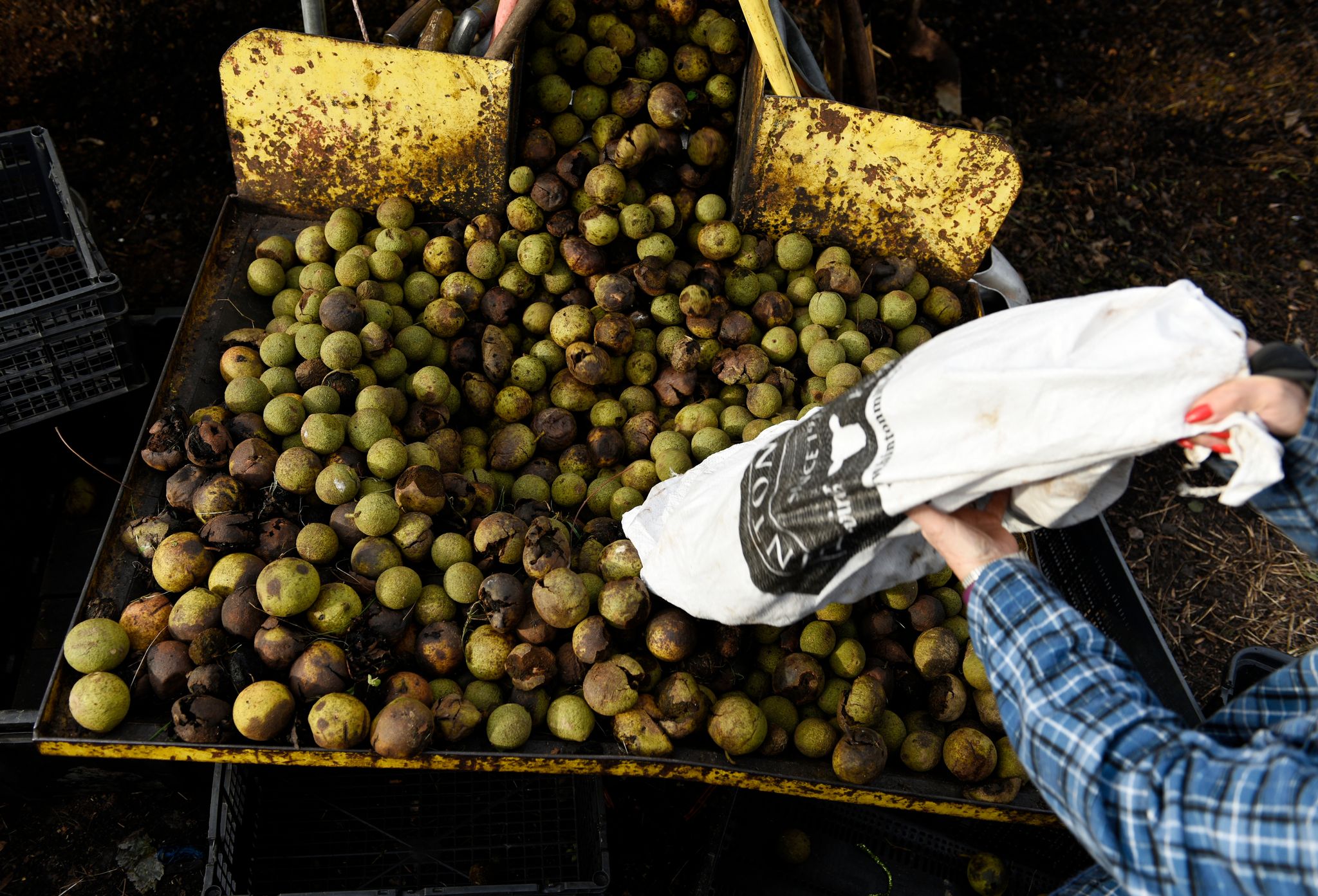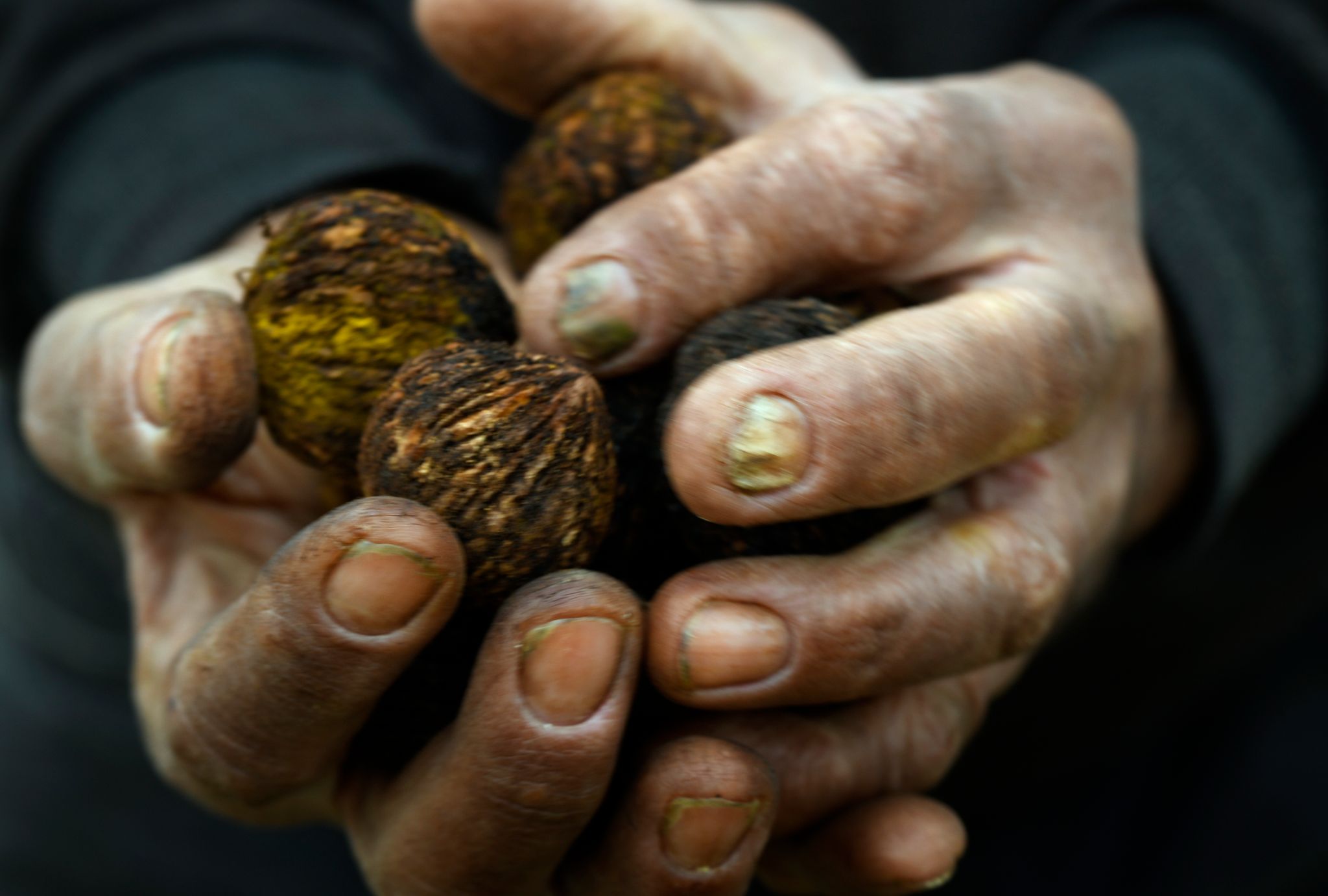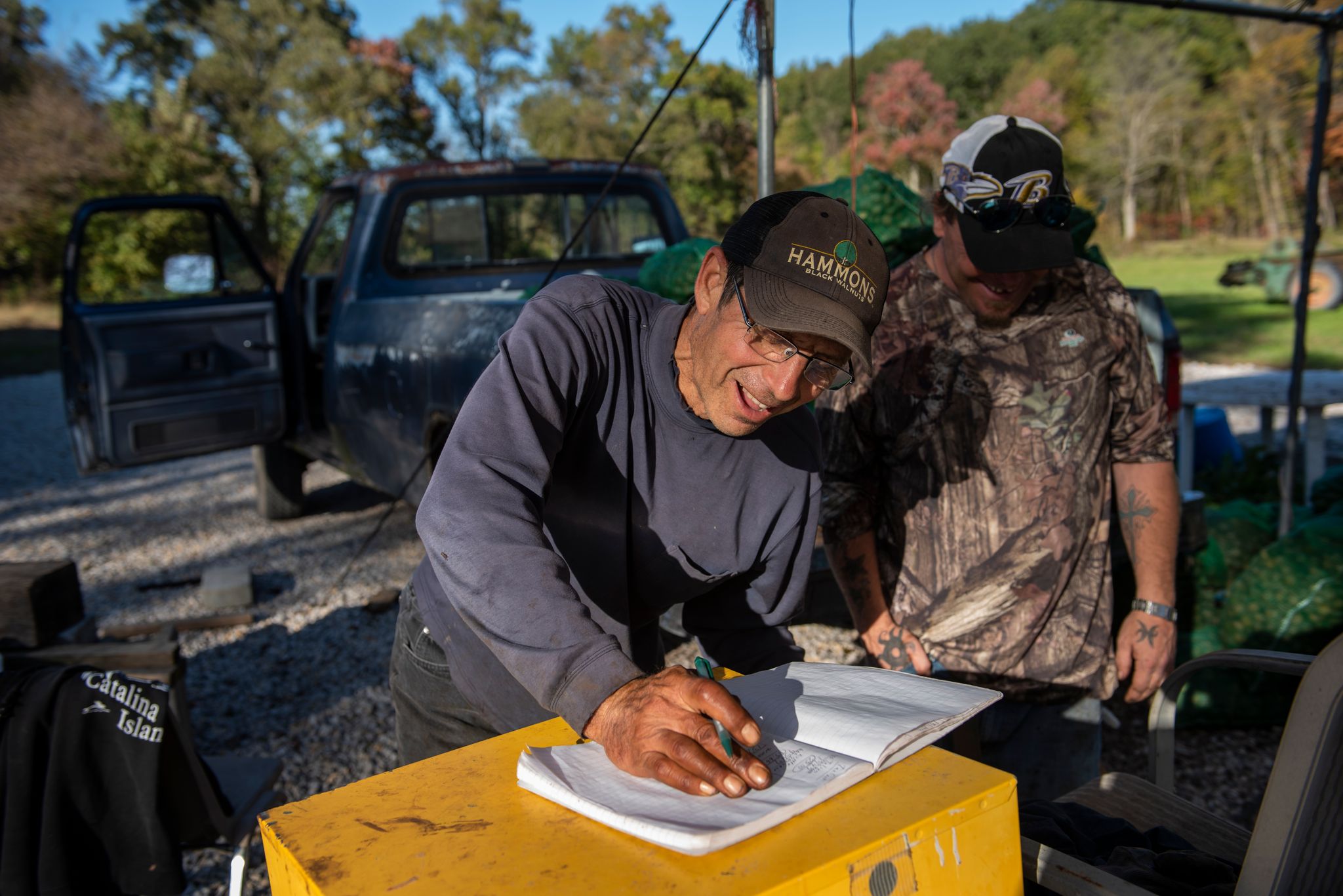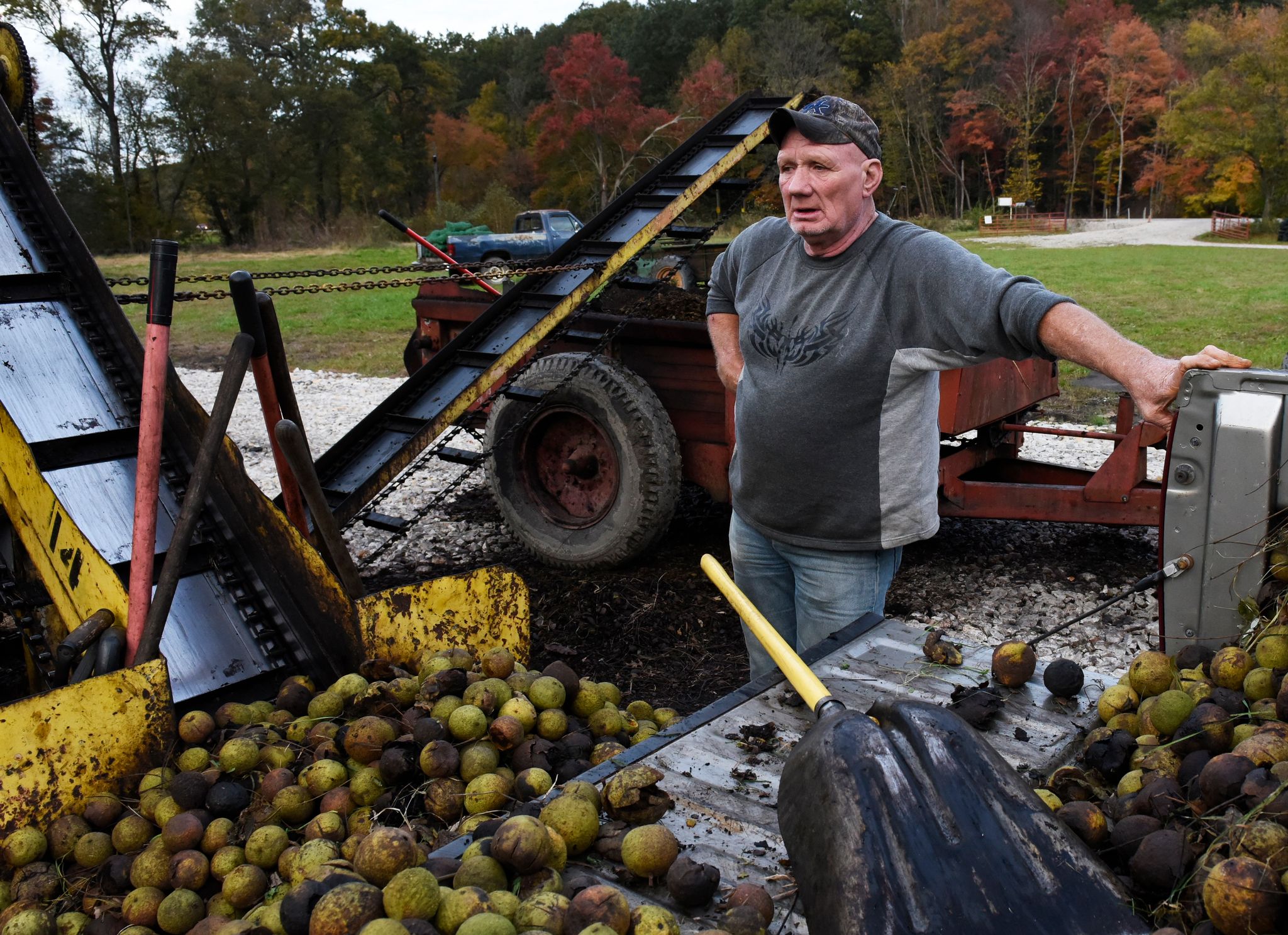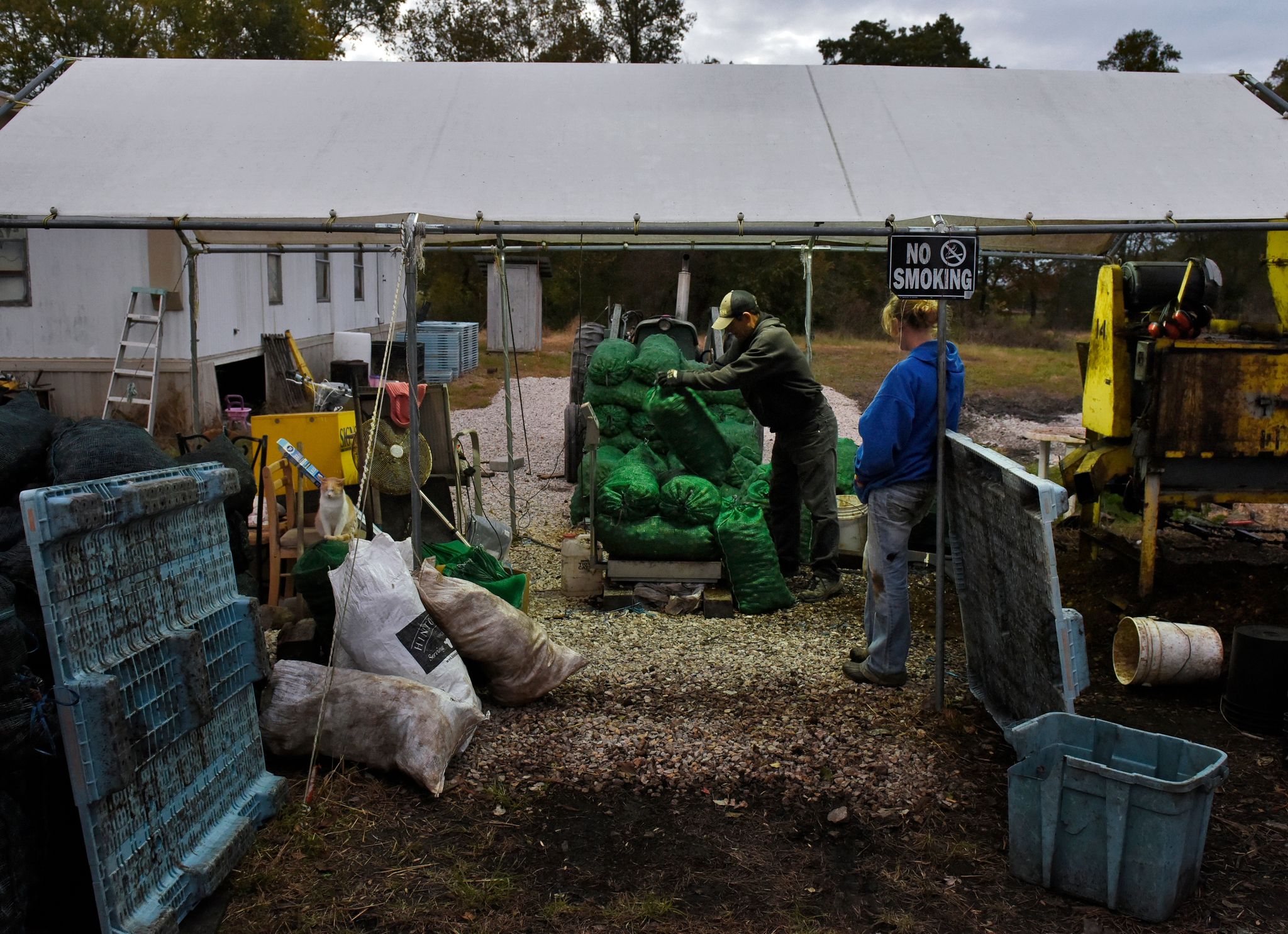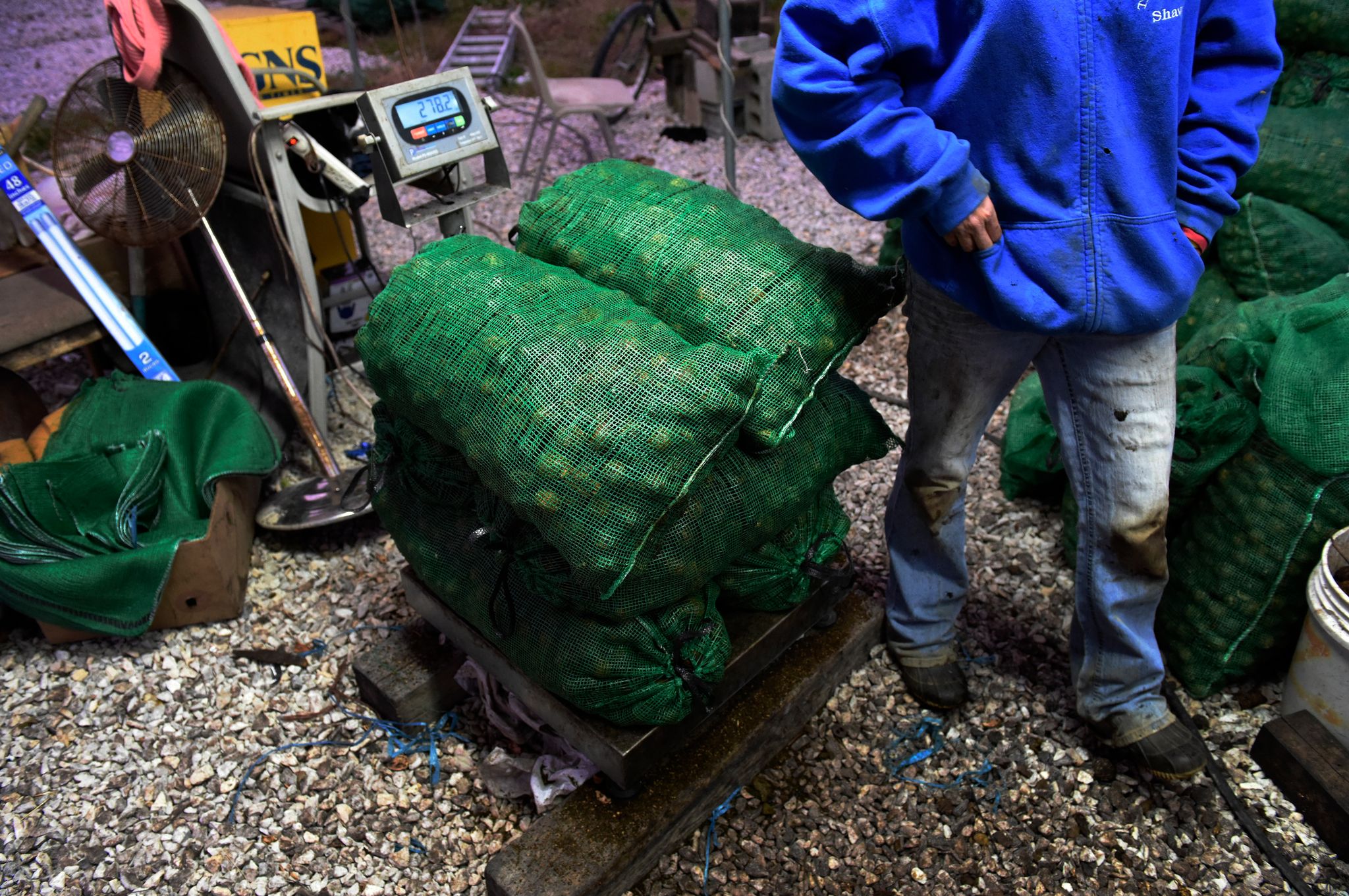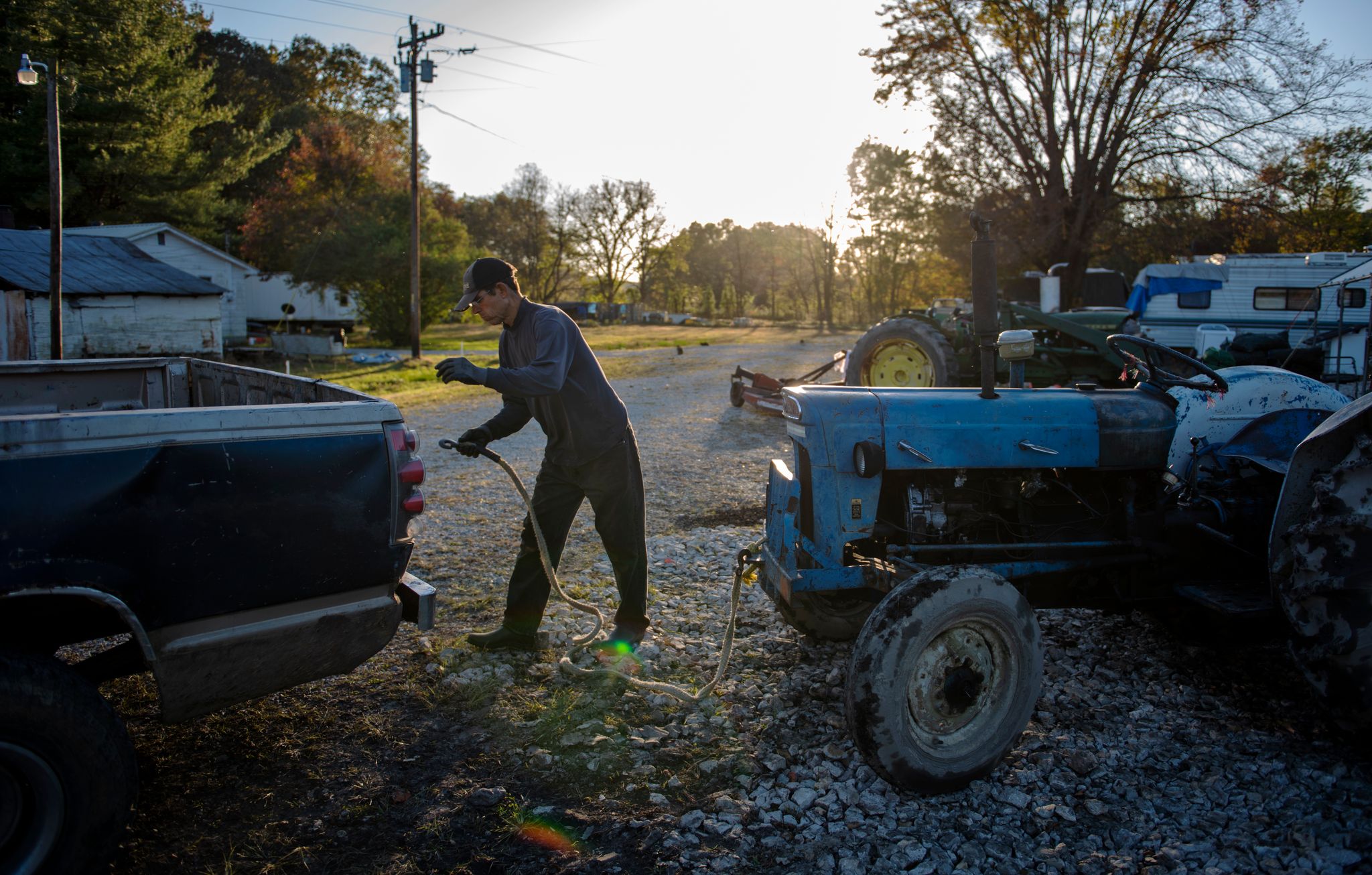
It’s not a good year for black walnuts. It’s Oct. 24, and Brian and Renee Zaharie just called for the first truck to carry away a load of bagged and paletted nuts that they’ll sell to Hammons Black Walnuts, a nut processor that relies on a network of contractors to collect the harvest from community gatherers.
The Zaharies have been one of the biggest buyers of black walnuts in the nation in years past, and by this time last year, they were well on their way to more than 10 truckloads. Black walnuts are a critical source of their income.
But it has been an unusually warm and wet autumn, and frost is key in bringing down the nuts. Summer temperatures stretched into October, and heavier-than-average rains kept everything damp. A couple recent freezes finally had people checking trees again.
“The frost brings down the nuts,” explains Renee, 58.
Good year or bad, their driveway must be covered with gravel, the hulling machine maintained, and the nuts bagged and shipped, whether one truckload or 10. In years past, cars and trucks were parked bumper to bumper the length of the Zaharies’ driveway thanks to a reliable community of loyal gatherers who return to year after year.
“The good Lord blessed our hard work and honesty,” says Brian, 63.
But even in this slow year, when Wayne Stull, 62, arrived to find a short line, he parked his truck behind a trailer full of bagged nuts and jumped out to help unload.
“I’m happy when I’m working,” Wayne says.
Gathering the wild nuts is a long-standing tradition in Eastern Kentucky. Residents gather on their own property, along creeks running through the land of friends and neighbors, and from under roadside specimens. This year, Brian is paying 14 cents a pound for hulled nuts. For some gatherers, it’s a primary source of seasonal income. For most, it’s a way to make an extra buck or two.
However, even the hardest working gatherers need the nuts to fall.
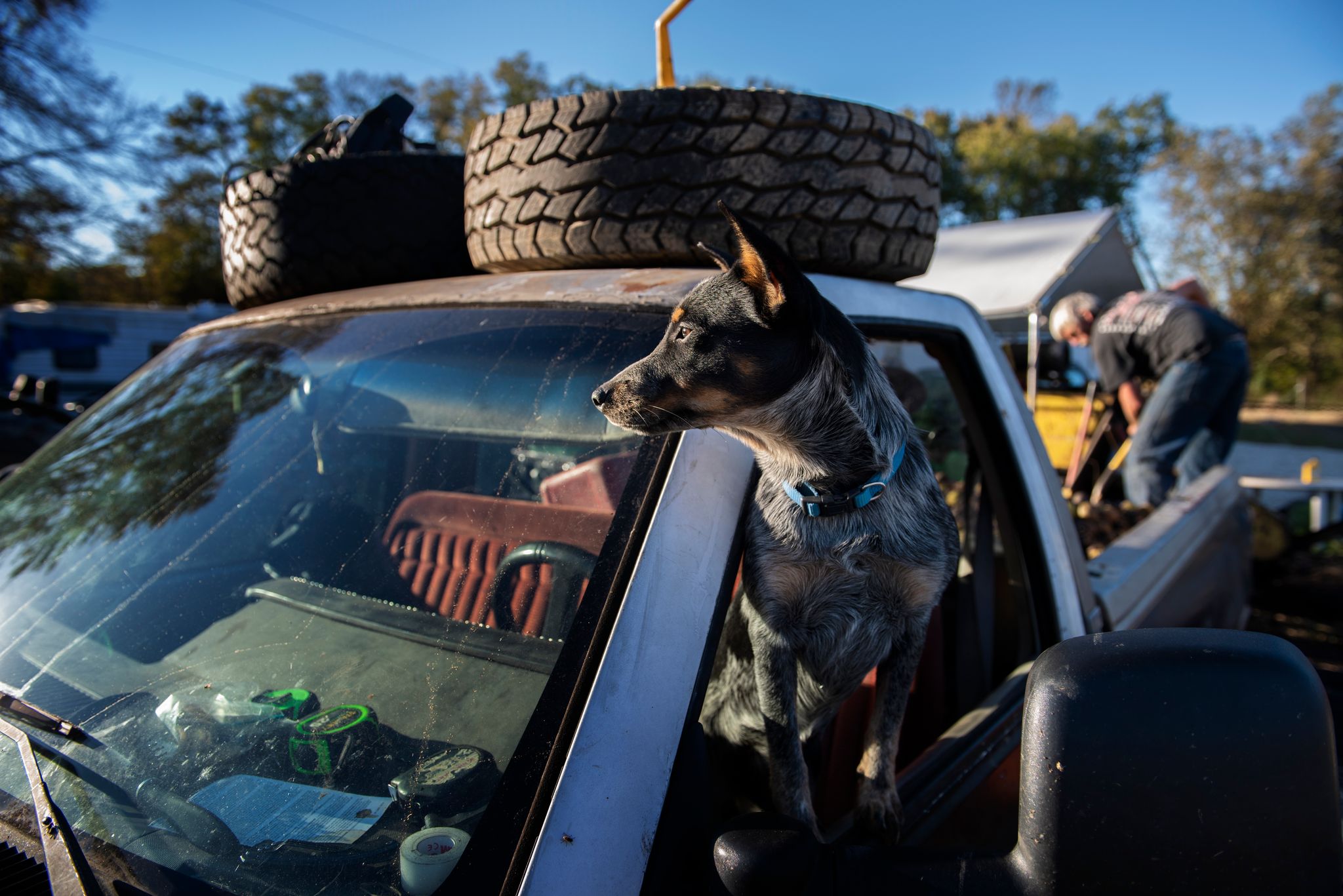
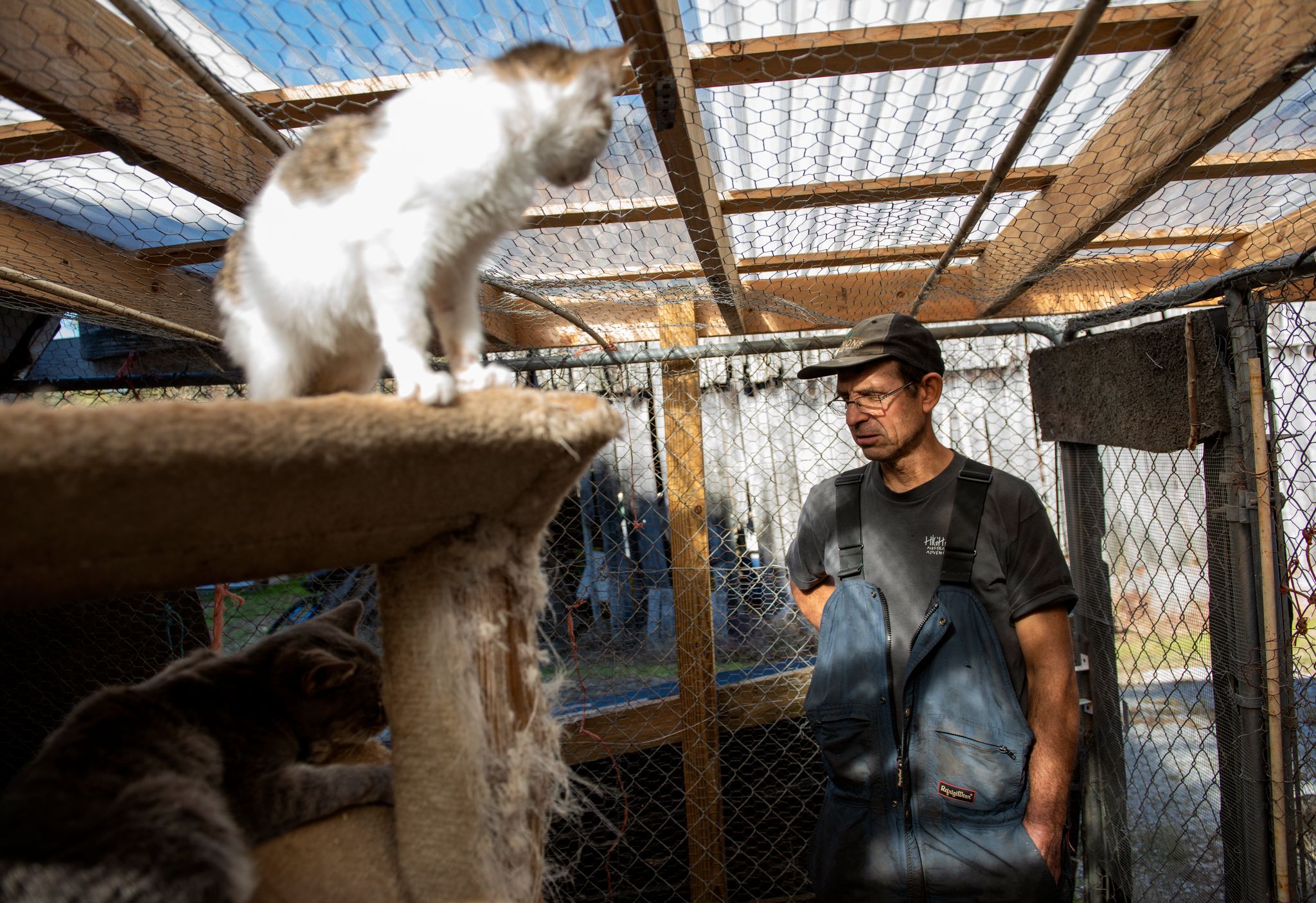
Bring a load of walnuts to the Zaharies, and a cat – or three – is likely to inspect your cargo. Renee runs a non-profit that tends to stray cats, and Brian and Renee care for a number of abandoned and forfeited animals. Some of the animals fancy themselves accountants, while others offer advice as to the proper functioning of the hulling machine. All will kiss any nose offered and settle into any available lap.
The animals and their faith keep the Zaharies going during slow times. They have lived all over the United States but settled permanently in Kentucky because they could build a simple but self-sufficient life here.
Still, they hope the nuts fall.