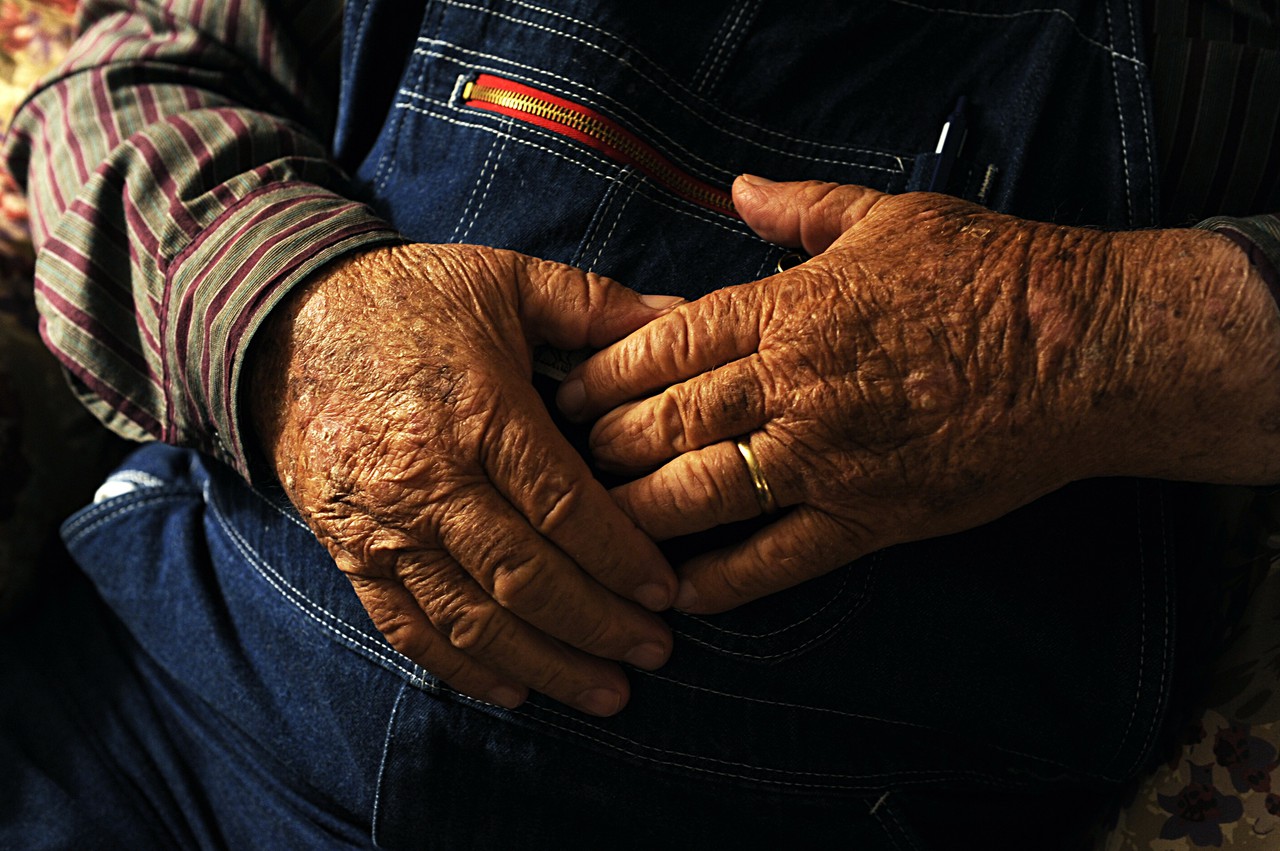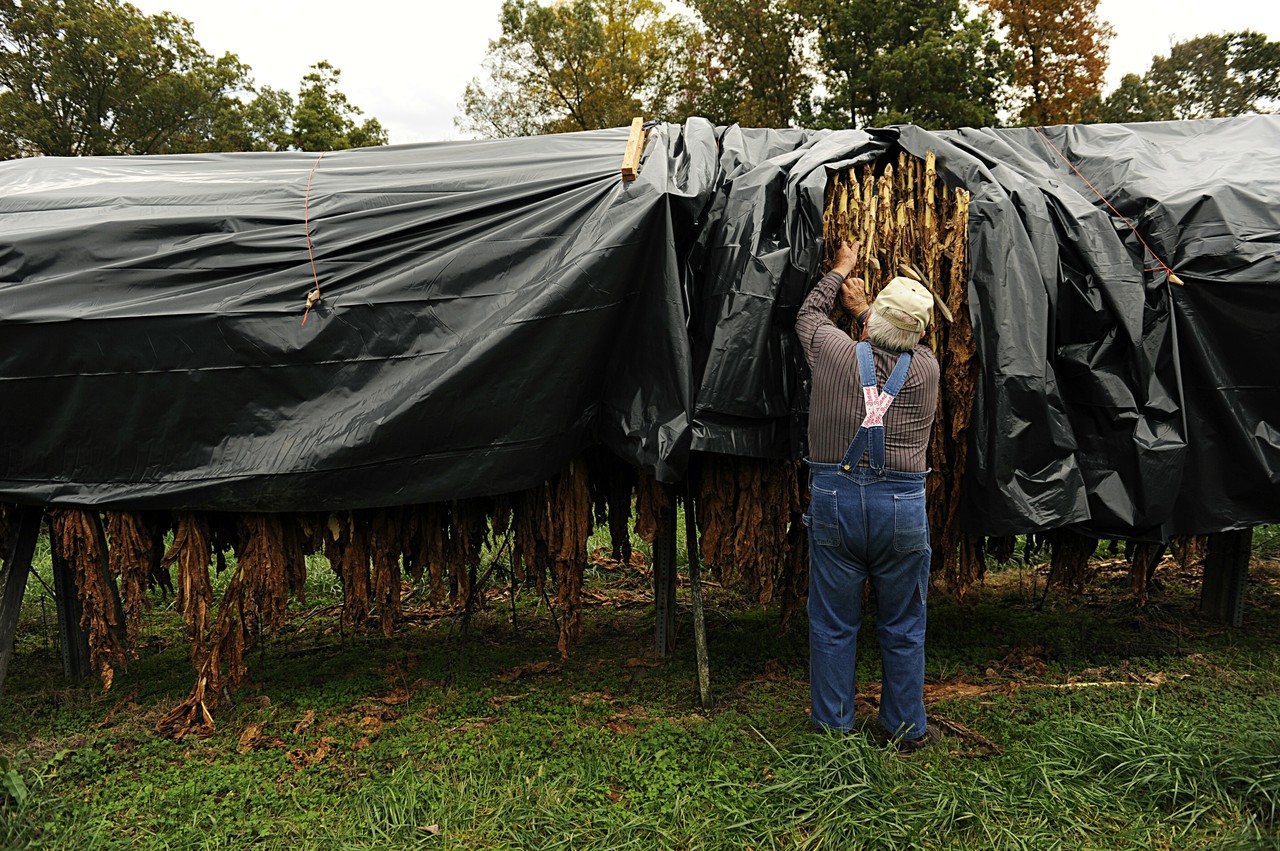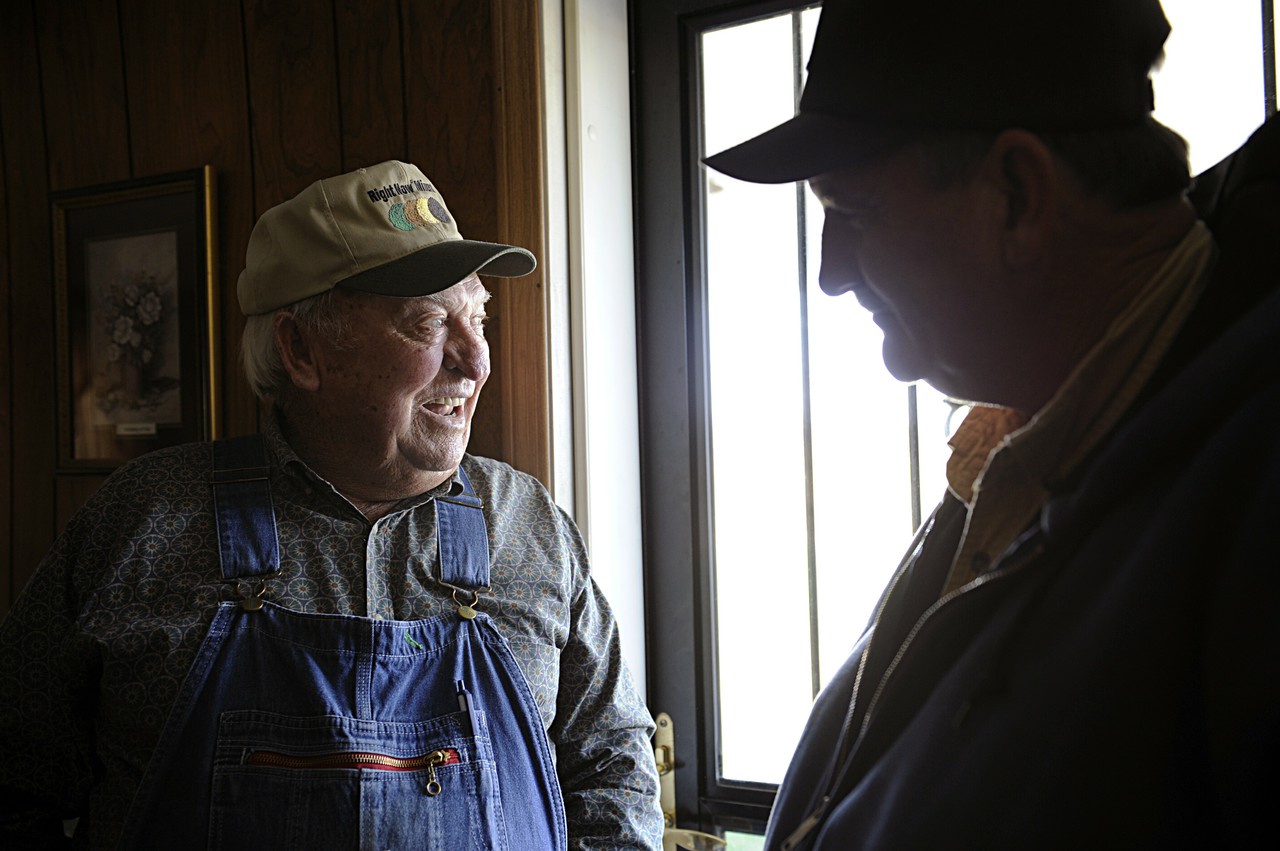
Carter Muse is a man of constants. His weathered hands are a tan reflection of the tobacco crops he has dedicated his life to harvesting. His determination to continue farming, despite being 78 years old, had a lot to do with avoiding what he calls “the rust.”
“If I just let the old machinery sit in the barn, it will rust over and be worthless and that’s how the human body works,” he says. “I’d be all wore out if I just sat in a chair all day.”
Each morning, he wakes at 6 o’clock, watches an hour of news and goes out to oversee the workers on his farm; a routine that is as deeply engraved as the texture in his hands.
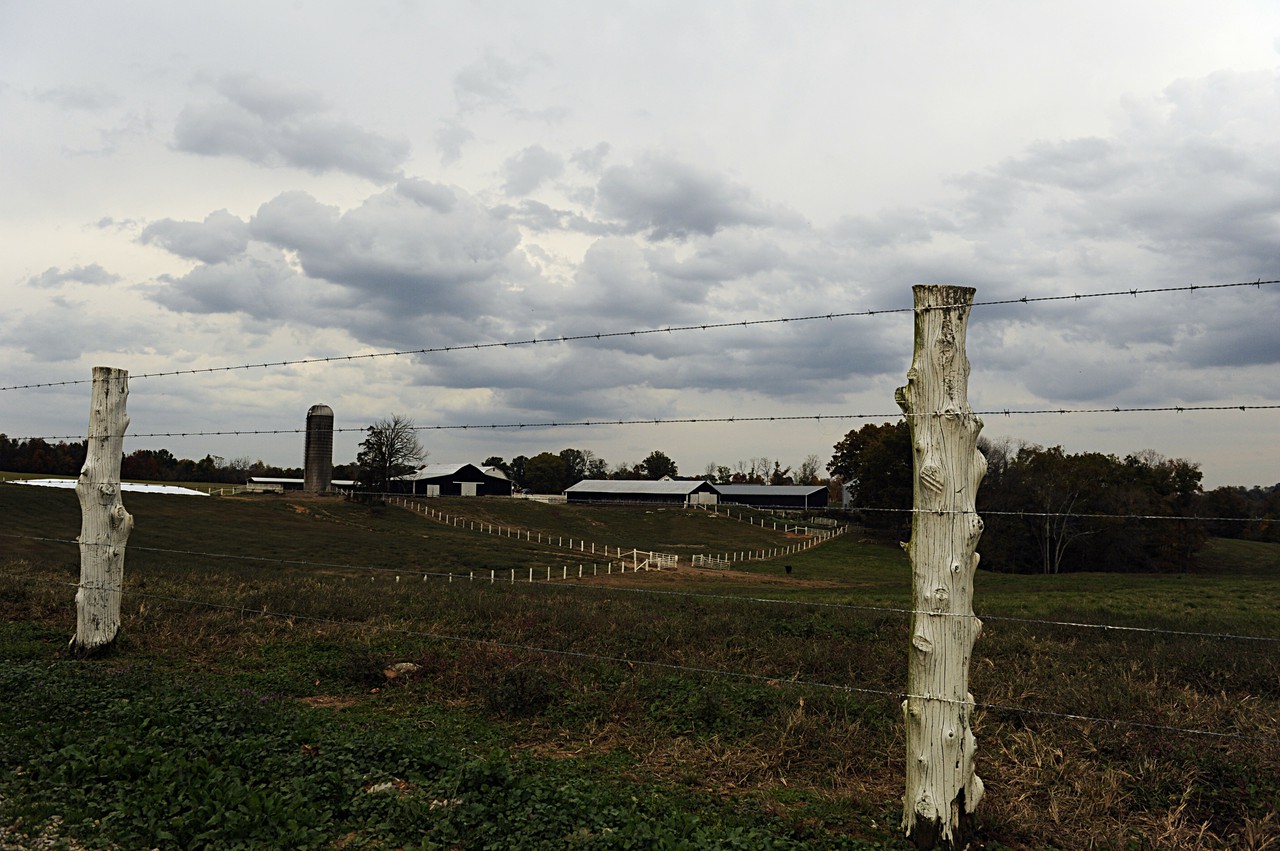
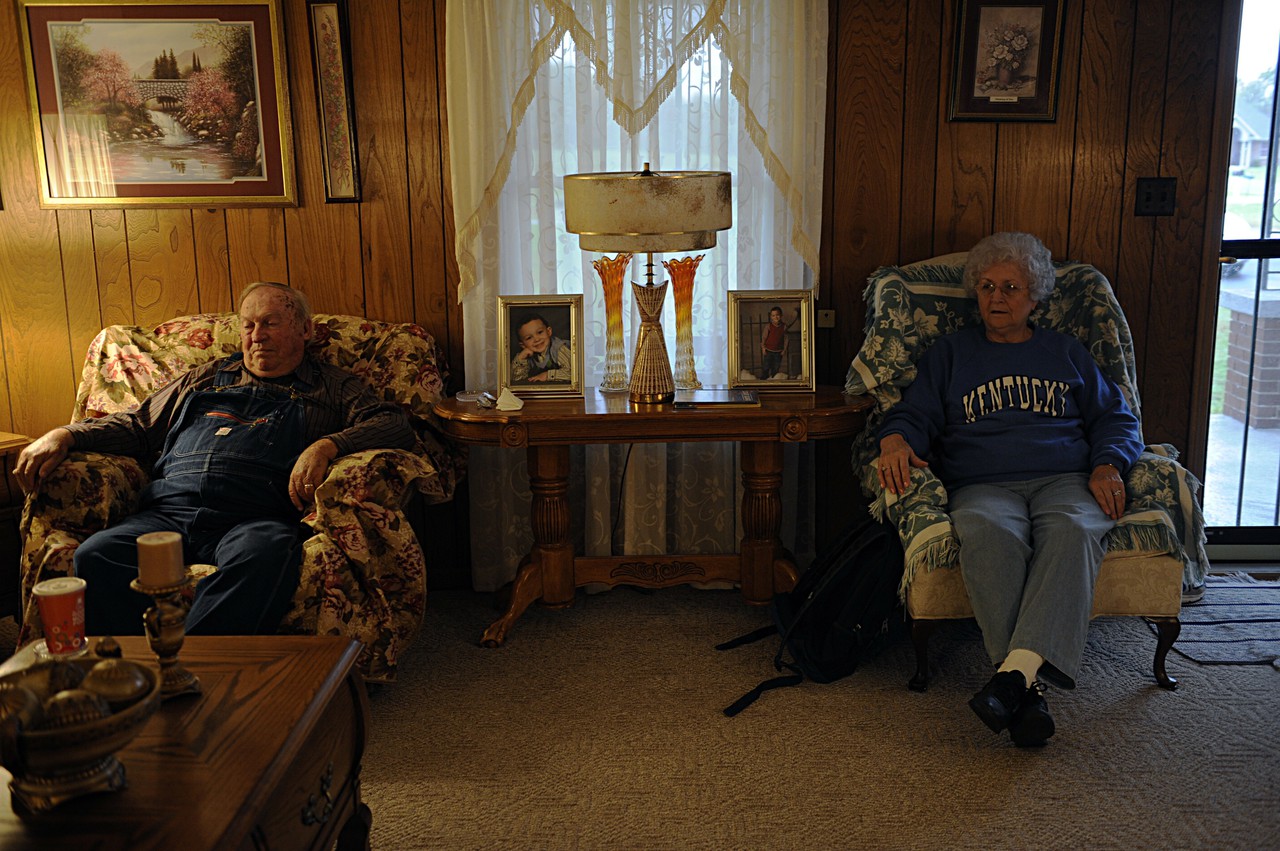
Carter was born in what is now 50 feet below the Cumberland River. The home he shares with Illene, his wife of 53 years, overlooks the same waters by twice the height. His birth certificate lists the Bud Post Office as his birth place. It no longer exists.
He didn’t have electricity until the age of 16, a year after his father built the home his still lives in. Carter has experienced financial stress and wanting for not over the years but bears no regret for the life he chose so long ago.
“Anything you work for, you’ll appreciate it more,” says Carter.
Over the years, he has forged a deep impact in his community. Almost every day, Carter eats at Mill Springs Pizza in Nancy, accompanied by a host of various farmers from throughout the area. All have know each other by first name their entire lives and share a deep connection through the land they farm.
“I want to leave my farm and my community in better shape than I found it in,” says Carter.
His family is just as connected.
“I could call for help from anyone, niece, nephew or aunt at any time and they would be here as soon as they could,” says Carter.
None of his family has moved farther than a few miles away. Although they never had children of their own, Illene and Carter helped raise a nephew, Darren, after his father unexpectedly died.
Now with a family of his own, Darren, his wife Amy and their son Drew live about 400 yards from the home he grew up in.
Even with family in place to take over the farm, once Carter is no longer the caretaker, he worries that soon his farm will cease being a tobacco farm.
“It used to be everyone grew tobacco, but now it’s just a few of us left,” says Carter.